Our Services
Our MRI platform provides advanced preclinical imaging capabilities structured across three core service areas, supported by study design consultation and collaborative data analysis.
Structural MRI
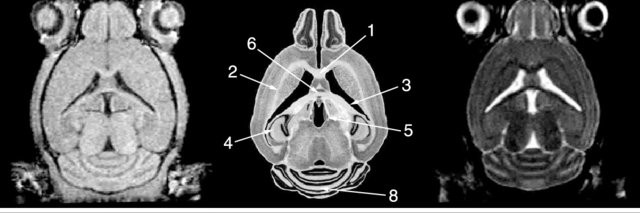
Brain MRI
Hyperpolarized 13C MRS
Study design & Translational Alignment
We offer high-resolution structural imaging for detailed anatomical assessment across multiple organ systems. Applications include visualization of soft tissues, vascular architecture (especially in stroke models), and cardiac structures, as well as precise tumor volumetrics for longitudinal monitoring of growth and therapeutic response. Optimized T1- and T2-weighted protocols ensure reproducible anatomical delineation suitable for quantitative analysis and cross-study comparison.
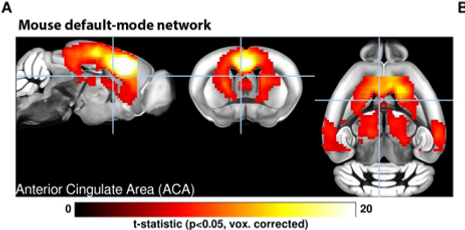
Our neuroimaging services integrate structural, functional, and diffusion-based modalities to interrogate brain biology in vivo. Functional MRI (fMRI) enables evaluation of brain activation, resting-state connectivity, and pharmacological modulation in a non-invasive and longitudinal framework. Diffusion imaging provides quantitative insight into tissue microstructure and white matter integrity, supporting studies in neurodevelopment, neurodegeneration, and network-level dysfunction. Together, these approaches allow comprehensive structural–functional characterization within a single experimental platform.
A distinguishing capability of our platform is Hyperpolarized ¹³C Magnetic Resonance Spectroscopy, which enables real-time visualization of metabolic flux in vivo. This approach supports quantitative assessment of pyruvate–lactate conversion and interrogation of BCKA–BCAA metabolism. Hyperpolarized imaging is particularly valuable for early therapy response monitoring, offering mechanistic metabolic biomarkers beyond conventional anatomical readouts.
We provide consultation at the experimental planning stage to align imaging endpoints with biological hypotheses and translational objectives. Where advanced modeling or specialized analysis is required, we collaborate with quantitative imaging partners to ensure methodological rigor and analytical robustness. Our services are available to both internal and external researchers, with engagement models tailored to project scope and scientific complexity.